Showing posts with label Wikipedia. Show all posts

Thursday, March 17, 2022

Treaty-making

From The Kentuckians by Janet Holt Giles:


"Still, I thought it more than likely he (George Rogers Clark) was right about Arthur Campbell and Billy Russell.  Besides, both had been hand in glove with Colonel Henderson, along with the Robertson brothers, in the treaty-making."


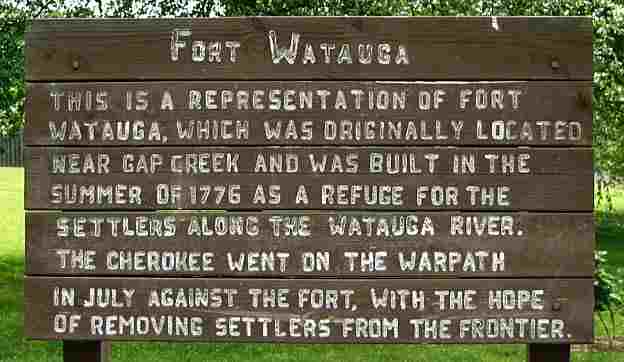
Treaty Of Sycamore Shoals

Thursday, February 17, 2022

He Came Of A Valiant Race


Source


...leaving Fort Peyton on the 7th inst., and proceeding south....

Fort Peyton (Florida) LOC 1839 Map


...a large Seminole villae, near Mosquito Inlet, was reached, and, after surrounding it, at dawn of day on the 10th the dragoons, under McNeil and May, charged the enemy... .  Our loss was the gallant McNeil, who received a mortal wound while leading his men.  This officer--one of the youngest in service--was deeply regretted, both on account of personal and professional worth; he came of a valiant race--son of General John McNeil, late of the army, and grandson of General Benjamin Pierce,* of New Hampshire, a hero of the Revolution.

*Father of McNeil's mother, Elizabeth Andrews Pierce McNeil, and President Franklin Pierce


Thursday, September 9, 2021

Chain Of Destiny

 Chain Of Destiny by Nigel Tranter. is a story focused on King James Stewart IV of Scotland.


Source


Flodden Field (Source)

The King died in the Battle of Flodden.


Friday, April 2, 2021

Reverend Samuel Doak


Always an eager and skillful questioner, Mrs. McCormick undoubtedly brought out the highlights of Tusculum's history: how the Rev. Samuel Doak, a Presbyterian clergyman and a Princeton scholar, had penetrated into this lovely valley in the last quarter of the eighteenth century, built a log cabin to house the modest beginnings of Martin Academy, which by 1795 had become Washington College; how after preaching and teaching the classics there for twenty-three years, he had come fourteen miles farther along the valley to set up another academy, which in time became Tusculum College. Again the combination church and school was a log cabin. 

The buildings stood on a hill commanding a beautiful mountain view and overlooking town, valley, two rivers — the Watauga and the Doe. 


Whoever wrote to Mrs. McCormick of this fair region always mentioned the historic sycamore near the fords of the Watauga, where the Reverend Samuel Doak had prayed for the doughty mountaineers who were to turn the tide of the Revolution at King's Mountain. [Source]


Sunday, January 10, 2021

William Alexander, Lord Stirling


It had been family tradition that his father was next of kin to the Earl of Stirling, who had died without issue in 1739. This Earldom included grants to vast tracts of land in America, as well as in Scotland. 
A jury of Service of the leading men of Edinburgh declared upon the evidence presented to them that he was Earl of Stirling. Under Scottish law this was considered sufficient warrant to assume the title. 

 It was while his headquarters were at Elizabethtown that Lord Stirling made a daring exploit in capturing the British armed transport, Blue Mountain Valley, of 300 tons burden, mounting six guns and loaded with stores for the British army at Boston. Congress commended him by resolution for this exploit.

General Washington, having witnessed the remarkable bravery and ability of Lord Stirling, immediately endeavored to make an exchange of prisoners so as to regain his services. He succeeded in exchanging 
Governor Mortfort Brown, of Florida, for him, and shortly after the evacuation of New York Lord Stirling was enabled to rejoin the army. 

Saturday, January 2, 2021

A Cousin's View Of E.B. Ward


Source

The scathing description of E.B. Ward in The Autobiography of David Ward:

"After Uncle Samuel's death, his willed estate, in addition to a considerable property possessed before by Eber B. Ward, mostly given him by Uncle Samuel before his death, constituted Eber B. Ward comparatively a very wealthy man at about 1855, considering the poverty of the then new West. Thus, at about 44 years of age, it came to pass, though he was largely so before that age, that E. B. Ward became an overbearing, egotistic, vainglorious, dishonest, tyrannical, vindictive, aggressive, energetic, selfish man, largely devoid of conscience. "...[he]...soon spread out his then comparatively vast fortune in some legitimate investments, but mostly in illegitimate, dishonest schemes in view of showing his financial ability, power and consequence."


Thursday, October 1, 2020

The End Of The Line


George, Earl of Dunbar and March (Cospatrick), one of the major characters in the historical novel, The End Of The Line, by Nigel Tranter, was the last of his family to hold the title.

As an Earl, George's life was intertwined with the politics, as was his father before him. Important to the story was King James I.

"James First Of Scotland...was born in the year 1394. He was the son of Robert III, the second of the Stewart line. Robert s eldest son David was considerably older than James. He was created Duke of Rothesay, being the first who bore the title of duke in Scotland."  "...[the Duke of Rothesay] was cast into a dungeon and during fifteen days cruelly starved to death. No male heir was now left between Albany [the King's brother] and the crown but his young nephew James." [Source]

Cameron of Lochiel was mentioned:

"There were complaints [about Alexander, Earl of Buchan] coming from many clans and chiefs, including the Lord of the Isles himself, the new Earl of Ross, the Mackintosh, Cameron of Lochiel, Shaw of Tordarroch and others."


Thursday, September 3, 2020

Campaign Of Extermination


"In 1792 Chief John Watts (also known as “Young Tassel”) undertook a campaign of extermination against the Cumberland settlements."

"His plan was to cut off all lines of communication by posting bands of warriors on the two paths leading to the Cumberland, while he, with the main body of 281 warriors, undertook to destroy the fort at Nashville, along with all outlying stations, dwellings, and other improvements."

Fort Southwest Point (near present-day Kingston, Tennessee)

"On hearing of Watt’s plans, Governor Blount ordered Capt. Samuel Handley to take a company of 42 men from Southwest Point to Nashville, and reinforce the garrison there."

We followed the *Avery Trace....(Source)
*"it led from Fort Southwest Point at Kingston through the Cumberland Mountains...from there it worked through the hills and valleys...and finally to Fort Nashborough." (Wikipedia)

"They left Southwest Point over the Cherokee Path, and, upon entering Crab Orchard Gap, were ambushed... ." (From The Upper Cumberland Of Pioneer Times)


Saturday, August 15, 2020

Veteran Of Point Pleasant Battle Marched To The Aid Of General Washington


One of the first companies that marched to the aid of Washington when he was at Cambridge in 1775 was that of Captain Michael Cresap, which was raised partly in Maryland and partly in the western part of Virginia. ...his company may be taken as a fair sample of what the riflemen of the frontiers of our country were, and of what they could do. We will therefore give the words of an eyewitness of their performances. This account is taken from the Pennsylvania Journal of August 23rd, 1775.


Battle In Lord Dunmore's War

"On Friday evening last arrived at Lancaster, Pa., on their way to the American camp, Captain Cresap's Company of Riflemen, consisting of one hundred and thirty active, brave young fellows, many of whom have been in the late expedition under Lord Dunmore against the Indians. They bear in their bodies visible marks of their prowess, and show scars and wounds which would do honour to Homer's Iliad.

"At night a great fire was kindled around a pole planted in the Court House Square, where the company with the Captain at their head, all naked to the waist and painted like savages (except the Captain, who was in an Indian shirt), indulged a vast concourse of people with a perfect exhibition of a war-dance and all the manoeuvres of Indians; holding council, going to war; circumventing their enemies by defiles; ambuscades; attacking; scalping, etc. It is said by those who are judges that no representation could possibly come nearer the original. The Captain's expertness and agility, in particular, in these experiments, astonished every beholder. This morning they will set out on their march for Cambridge." [Source]


Monday, June 15, 2020

The River


Chesapeake by James A. Michener:

"The Susquehannocks...felt intuitively that they should be on the warpath, proving their manhood."  "...an old warrior predicted...when the day comes that we are afraid to fight, we lose the river."

Pentaquad, the first main character encountered, was an outcast of the Susquehannocks.  He paddled down the river towards the legendary Chesapeake Bay, where he found wading birds and plentiful flora and fauna.


Monday, April 6, 2020

General Albert Sydney Johnston


Texas State Cemetery (Reinterred)


The death of General Sidney Johnston is heart-rendering, He fought bled and died-- for he breathed
his last in two minutes after dismounting suppose to have bled to death from a wound in  his Leg. (Quote from Miss Priscilla Larkin: The Civil War Diary of a Southern Belle)

Saturday, February 15, 2020

The Marchman


The Marchman by Nigel Tranter, relates the story of John Maxwell, Warden of the West March.

John Maxwell's father, who was the Warden when the story opened, was captured by the English during the Battle of Solway Moss.  John, a participant who escaped, became deputy warden.  He operated as the de facto warden, as the former deputy, Lord Herries, wasn't up to the job.

John Maxwell married Lord Herries' daughter, Agnes, who became close to John when she helped him with his warden duties.  After Agnes' father's death, her husband John was then Lord Herries, there being no sons in the family.

Source - Herries home of John And Agnes

King James V died, shortly after his daughter Mary's birth (Mary Queen of Scots), causing political upheaval in Scotland.  Mary, as the eventual wife of the King of France, lived in that country until she was widowed.

Mary met with some resistance from George Gordon, 4th Earl of Huntley as she was touring Scotland after her return, which culminated in the Battle of Corriches.  Lord Herries played an integral part of securing the victory for the Queen.

Also see Historical memoirs.... Herries, John Maxwell, 4th Baron, 1512?-1583.


Monday, November 4, 2019

Scarcely Any Taxes - Illinois In 1817


Lincoln-Berry Store In Illinois

Letters from Illinois ...., By *Morris Birkbeck, John Melish:

November, 1817

"...a few miles farther West [in Illinois] opened our way into a country preferable in itself to any we had seen... ".  "...foresee greater than in the state of Ohio, being so much nearer the grand outlet at **New Orleans." 

"...we have no rent, tithe, or poor's rate and scarcely any taxes, perhaps one farthing per acre." 

"Where we are settling, society is yet unborn as it were. It will, as in other places, be made up of such as come...".


*Morris Birkbeck's memorial at FindAGrave.

**After Abraham Lincoln returned from taking a flatboat to New Orleans, he clerked in New Salem for Denton Offutt, the boat's owner. A year later he and William Berry bought an interest in a general store... . (Source)


Friday, October 4, 2019

The Attack Of Robert Benham And The Aftermath


Source


Robert Benham was under the command of Major David Rogers and was shot in both hips during an attack on the Ohio River.  He hid from the attacking Native Americans and later encountered a Kentuckian whose arms were broken.  Between the two of them they were able to take care of basic needs.  They were rescued and taken to Louisville.


Monday, September 30, 2019

Envoy Extraordinary (For King Alexander III)


(Possibly Alexander III's Seal)

Envoy Extraordinary, by Nigel Tranter:

Alexander II of Scotland had just died and his young son Alexander III had been crowned king and was in need of a regent. 

*Patrick, Earl of Dunbar, was the "envoy extraordinary" for Alexander III.  Below is a brief biography of the earl:

Source

*Wikitree entry lists Cecilia Fraser as the sixth earl's wife; the historical novel, Envoy Extraordinary, and the above source names his wife as Christian Bruce.

Alexander III wed Margaret Plantagenet, daughter of King Henry III of England and Eleanor of Provence.  Alexander was preceded in death by his wife, Margaret, and all of his children. Daughter Margaret died in childbirth; the child, Margrete, was Alexander's only surviving heir in his lifetime.  King Alexander died suddenly (shortly after he was remarried to Yolande de Dreux), so his granddaughter, the young Margrete (Margaret, Maid of Norway), traveled from her Norwegian home to Scotland.  She was Scotland's first queen regnant, though she died Orkney, after her ship was blown off course, in the arms of the welcoming Bishop. 

King Alexander III left no heirs, which was a problem for Scotland. 


Saturday, August 24, 2019

Clan Buchanan And Its Plaid


Towards the middle of the 13th century, Gilbert, seneschal to the Earl of Lennox, 
obtained from him a part of the lands of Buchanan in Stirlingshire, 
and took his name from them. 

Clan Buchanan's entry at Wikipedia here.


Wednesday, July 24, 2019

The Fort


Source: LOC of Penobscot Bay (Maine) Map

A quote from The FortA Novel of the Revolutionary War by Bernard Cornwell; the subject was the Siege of Penobscot Bay, then part of Massachusetts, from July 24, 1779 to August 14, 1779):

We have received intelligence...from patriots in the Penobscot region.  We know for certain that a considerable force of the enemy has landed, that they are guarded by three sloops-of-war, and that they are commanded by Brigadier-General Francis McLean.  ...an experienced soldier.  Most of his service was in the Portuguese employment. (Page 96)

An authentic document that included a real-life character of The Fort:

Dr. Califf, affiant, was also a charachter in the book The Fort.

"Dr. Califf thinks that Matthew Lymburner cannot return to Penobscott.  he was taken prisoner by the Rebels during the Siege of Penobscott and cruelly treated but was liberated when the Rebel Fleet was drove a shore." [Source Audit Office: AO 12. Claims, American Loyalists...]

General McLean was also mentioned in the "Claims."


Monday, June 10, 2019

Bryce's Cross-Roads


Source
Narrative from Cahaba. A story of captive boys in blue:

"The leading regiment, the One Hundred and Fourteenth Illinois, reached the front almost breathless after its five-mile race, and was thrown at once into action without a solitary support, except the handful of Grierson's cavalry, already on the ground. These men had been hotly engaged for four hours, and their ammunition was about exhausted."

"The Ninety-third Indiana arrived on the scene some ten minutes later, having been delayed by the stragglers of the One Hundred and Fourteenth Illinois. Lest I should be misunderstood, let me say that these stragglers were falling behind, not on account of cowardice, but because overcome by heat and fatigue. Even in this breathless condition they were pressing on and doing the best they could to get to the front. A more gallant regiment was never enlisted."

"The Ninety-third Indiana reached the front with only a handful of men... . It was formed on the right of the One Hundred and Fourteenth Illinois, directly at the intersection of ' Brice's Cross-Roads,'... ."


Source